Last night did not end well - meltdown, Panadol and ice packs. What happened?
The last four days have been busy by my head banged standards and I was pacing myself well - mostly. I had prioritised, planned and paced - my three P’s. What I hadn’t counted on was the priorities of the people who love me most, among others.
Yesterday should have been filled only with washing towels, my concussion physio appointment, a visit to a lovely friend of ours and then home to rest before getting some study done. That was the plan, those were the priorities I had.
Add to that list of priorities a trip to the supermarket - my husbands priority - and an hour long trip became two and a bit. You cannot ignore the people who say hello according to my hubby. He forgets to look for the signs I am exhausted and losing the battle with my brain. I need to be more aware of letting him know - not being afraid to interrupt him with my fatigue.
Over lunch I had planned to look at some study after a rest - a full on brain break. The rest happened. The study happened but so did a hunt in response to a work email and an earthquake - these last two meant more than planned for screen time. Screen time is exhausting - my eyes and, therefore, my brain have to adjust constantly to the flickering that happens as screens update with our work or the changes brought about by video. Scrolling through Facebook is no longer a pleasant task.
Plan for the day - not too far off track so far. Priorities are, however, becoming less of my own. Pacing - also heading out the window. Time for a rest after another two hours of screen time even with my micro-breaks. A micro-break means I close my eyes for 30 seconds and rest the brain. If you see someone doing this relatively regularly then they too have some form of brain injury.
Dinner to cook - not too bad to get done but that really was to be the last of my energy reserves it turned out. Dinner did get cooked. Then the priorities of others took over. I had, however, managed to put off the research person wanting me to complete an ACC survey over the phone at 4.50pm. Never a good time if you are suffering mTBI.
The girl child had made cupcakes before dinner and announced after we had eaten that I was in charge of making the buttercream - not my priority, not planned for and certainly not paced into my day. I could do this - just. Armed with my noise reducing earplugs in place and with the girl child measuring ingredients ensuring we were following the recipe, which for me is something I cannot do at the end of the day without frustration and irritation surfacing.
Earplugs in, working not too badly until along came another of someone else’s priorities. Hubby had found an item on the local buy,sell, swap site that required a discussion regarding purchase - right then. Not planned for so definitely not paced for. A request for letting me focus on job one before completing another did not come out politely at all. Frustration. Irritation. Hurt.
Once the buttercream was made and the girl child was sorted to ice her cupcakes I moved to hubby and his needs. Discussion. Purchase. Whew!
A quick bed sheet change, during which hubby stuck his head in the door and failed to even notice I was using the last of my energy reserves. No help offered. Not the end of the world.
The cracks finally broke wide apart when I had tried to escape to the bathroom - unsuccessfully! Hubby hunted me down. By the time I was done I really needed to give my brain a break. Alas - too late. The pain in the injured part of my head was sharp. Reaching for Panadol I broke down in tears wishing again for a cast, a pair of crutches, anything on the outside that would remind those used to me going at a hundred miles an hour that I cannot do that at the moment. I am now up nursing my head with an ice pack as the Panadol did not cut the pain like it usually does. I have learned over the last few months that cooling the brain is the best way to stop the sharp pains I get.
Invisible injuries are the worst. People look at you and say you look fine. While I am at home and not over stimulated I feel fine. But there are things that are still not right - my sensitivity to sound and bright light, my memory, my lack of focus and, most of all, my fatigue. I know I am getting better - probably why my family forgets at times that I am still broken. But the improvements are hard won and only small steps.
How best to remind people? I guess I need to prioritise myself at the end of the day, plan to remind those around me that I struggle to add their plans in if I do not know ahead of time that I need to pace myself to allow for them. I need to use my P’s to protect myself. An invisible form of bubble wrap.
Tuesday, 30 October 2018

Friday, 12 October 2018
Invisibility from the Inside
 |
| Retrieved from https://lifeaftertbianewme.wordpress.com/2018/04/02/%F0%9F%94%B8-invisible-injury/ |
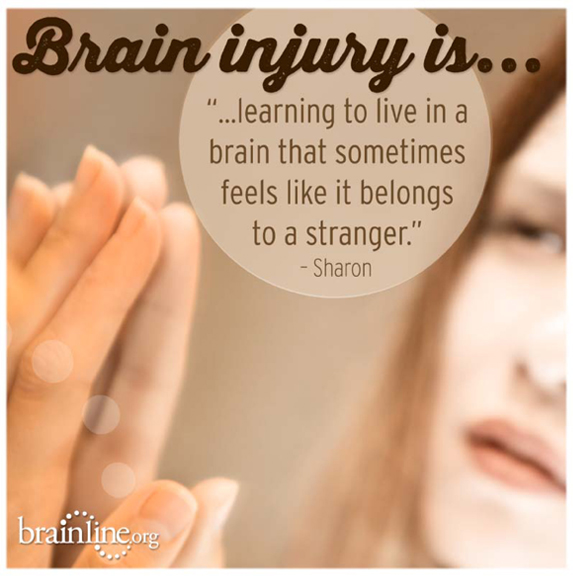
Did you know that concussion or mild traumatic brain injury is actually an invisible injury? You cannot tell from the outside what has happened on the inside until you have been with the person longer than they should have kept going. As a Resource Teacher this has given me a whole new understanding of those students I work with that appear perfectly normal but actually have something hiding on the inside. It explains the anxiety I was aware of but never understood in a boy who had dysgraphia needing assistive technology to help him express himself, yet was one of the cleverest students in my class. I now have an insiders view into their turmoil.
I have never before been in a situation where the words "You look fine" could make me feel such a range of emotion. Anxiety that maybe I really should be doing more than I was or better than I felt. Annoyance that just because I did not have a wheelchair, cast, bandages or other outward sign that that I was not OK I should be OK. Concern that anything I said or did would be held against me as reasons I should be at work rather than recovering at home. Anger as I knew what was going on on the inside, how much preparation and planning had gone into even being in the presence of that person, and how much it would take out of me by the time we were done. It could take me another day or two to recover from the excursion if I overdid it.
You see that's the not-so-funny thing about my injury. All the bruising and swelling is hiding inside my skull and down the right inside of my neck. There is no visible sign of it. Unless I am overdoing it. Then I start to slur words, cannot find the words I want so start talking gibberish, cannot stand for any length of time because my legs shake, withdraw from the social side of the situation, get the shakes on the inside anyway, my vision becomes blurred or double, feel nauseous, rub at my forehead as the tension increases and the headache begins. I have been told by those who know me well that before I get to that stage I go quite pale - like I am suffering the flu.
I am sometimes left feeling like I am faking it. That because I look fine and the black eye and grazes have healed that I should not be complaining about needing to leave after a short space of time or that I should be capable of working at least part of a day. The fact that I know how long I can last - no more than an hour, if that, of focus/concentration/socialising - does not quell these feelings. I totally understand why those with invisible injuries or disabilities find it easier to be either at home or with a few trusted friends. You are not judged for how you seem on the outside.
The video below was created by Miles Christian and shared on the Waikato Brain Injury Facebook page. It is titled 'Living with a Concussion - NO ONE UNDERSTANDS' and I so totally relate to his frustration and inability to express exactly how it feels. To be able to start the day well but end up fading with the physical, mental and emotional exertion needed to just get through the day.
According to the Disabled World Invisible Disabilities website there is about 10% of the USA population with an invisible disability. When we stopped to talk to the local Brain Injury Association lady as she was fundraising for the branch here in Whanganui a poster stated that a New Zealander suffers a brain injury every 15 minutes. However, she said the latest statistic is closer to every 10 minutes. So I am not alone then. I am left to wonder how many others are left feeling like fakes, frauds and phoneys? How many of the students sitting in our classrooms are expected to just get on with it when actually there is an invisible injury from their past or a disability hampering their ability to focus, concentrate, find the words that they need to express themselves in whatever form? How well do we really understand their plight?
There is a quote I have seen several times on Facebook and in other places about not judging me until you have walked a mile in my shoes. I am grateful to those that get past the fact that I look fine and ask about how things are really going on the inside.
Sunday, 7 October 2018
A Real Jekyll and Hyde Syndrome
 |
| Retrieved from https://www.brainline.org/article/traumatic-brain-injury-is |
Most days along this mild traumatic brain injury journey I am on I have managed to live by the phrase 'it is what it is'. But then there are the other days, or the end of each day. I am told this is due to the areas of my brain that were hit as I fell and my brain bounced around inside my skull.
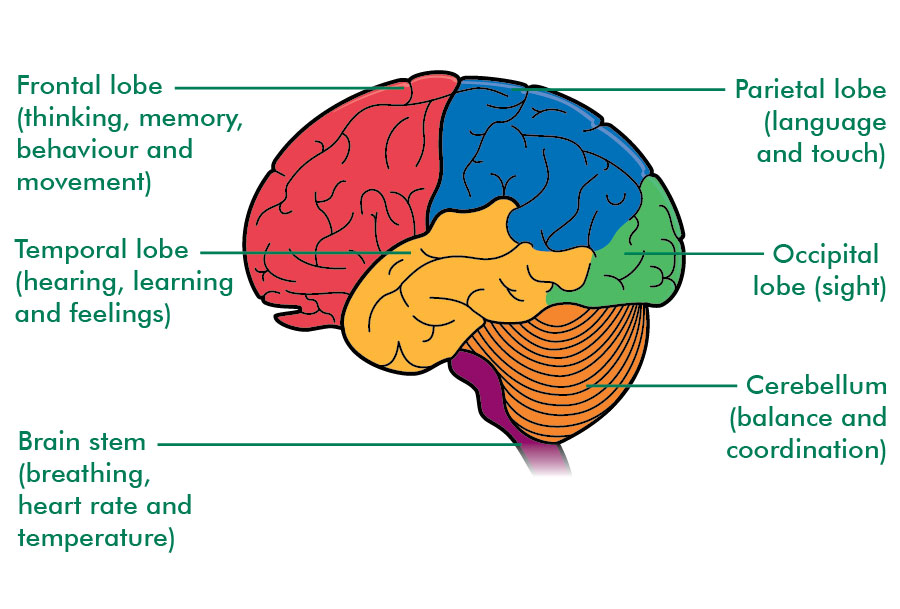
I landed on the left area of my head right where the temporal lobe is. This manages the feelings (somewhat broken as you will see as you read on), hearing (I am now sound sensitive) and learning (things go in but fail to be retained). My sight, in the form of malfunctioning binocular vision and light sensitivity, was affected as the brain bounced back into the skull and hit the occipital lobe and my balance is off because the cerebellum took a bit of a hit at the same time. My brainstem has shown its injury through my inability to manage my heart rate once I begin to overheat. There are minor language difficulties as described in my last post so I figure that the parietal lobe also received a good bruising.
I have never thought of myself as nor behaved like a diva. That kind of behaviour was not tolerated as I grew up and whatever self-centredness I had disappeared with the birth of our daughter. Funny thing about being a parent - suddenly your wants and needs go to the bottom of the pile.
I did suffer from PMT at times leading to tears and meltdowns. I have probably been what could have been diagnosed as depressed twice in my adult life. I have had stress related meltdowns, after which I would pick myself up and dust myself off. These all had the feeling of me not being in control at the time they were happening - something I had to ride out over a few hours and they were gone - usually for weeks at a time.
The emotional meltdowns that came after my head injury had some things in common with those earlier ones - but there were also previously unknown elements to them too. They were well beyond my control. I did, after a while, manage to pick myself up, dust myself down and move on - but not as quickly and with a fresh meltdown triggered exceptionally easily. I know from previous learning that I have been living in a flight or fight mode - fight being my most common response. Once I have been triggered the initial adrenaline rush subsides but the cortisol in my system as a result of the meltdown can make it super easy for me to be triggered over the following 24 hours. The anger could last for quite some time where previously a good cry and a hug dissipated it. I felt out of control - no longer the master of my emotions and not liking that feeling one little bit.
Initially I would have said this side of the mild traumatic brain injury did not set in until around the same time as everything else did - about a week and a half after impact. However, if I look back at our time away in Rarotonga there were signs it was starting then. Annoyance, as if it was hubby's fault, that we had been given the wrong information about where Matutu Brewery was in relation to Muri. A longer walk than 'just a K up the road' which we had been told. I had a headache, it was hot, I was in jandals rather than solid shoes for walking the 4 km each way we had to go, and I needed a loo - the brewery did not have a public one. Instant irritation, frustration and the holding back a meltdown. That was not the only time it happened over there but it was the worst and left me feeling like a very horrible wife out the other side of it all.
 |
| Retrieved from http://www.braintumoursupport.ie/the-central-nervous-system/brain-lobes-functions/ |
I have never thought of myself as nor behaved like a diva. That kind of behaviour was not tolerated as I grew up and whatever self-centredness I had disappeared with the birth of our daughter. Funny thing about being a parent - suddenly your wants and needs go to the bottom of the pile.
I did suffer from PMT at times leading to tears and meltdowns. I have probably been what could have been diagnosed as depressed twice in my adult life. I have had stress related meltdowns, after which I would pick myself up and dust myself off. These all had the feeling of me not being in control at the time they were happening - something I had to ride out over a few hours and they were gone - usually for weeks at a time.
The emotional meltdowns that came after my head injury had some things in common with those earlier ones - but there were also previously unknown elements to them too. They were well beyond my control. I did, after a while, manage to pick myself up, dust myself down and move on - but not as quickly and with a fresh meltdown triggered exceptionally easily. I know from previous learning that I have been living in a flight or fight mode - fight being my most common response. Once I have been triggered the initial adrenaline rush subsides but the cortisol in my system as a result of the meltdown can make it super easy for me to be triggered over the following 24 hours. The anger could last for quite some time where previously a good cry and a hug dissipated it. I felt out of control - no longer the master of my emotions and not liking that feeling one little bit.
Initially I would have said this side of the mild traumatic brain injury did not set in until around the same time as everything else did - about a week and a half after impact. However, if I look back at our time away in Rarotonga there were signs it was starting then. Annoyance, as if it was hubby's fault, that we had been given the wrong information about where Matutu Brewery was in relation to Muri. A longer walk than 'just a K up the road' which we had been told. I had a headache, it was hot, I was in jandals rather than solid shoes for walking the 4 km each way we had to go, and I needed a loo - the brewery did not have a public one. Instant irritation, frustration and the holding back a meltdown. That was not the only time it happened over there but it was the worst and left me feeling like a very horrible wife out the other side of it all.
 |
| https://www.pinterest.nz/pin/557742735099886855/ |
One major discovery was that I could not cope with following a recipe in the evenings. As I was struggling with the visual mind freak that going to the supermarket involved we decided to try using the Bargain Box system, where the bulk of your main meals are delivered as fresh ingredients to your door on a Sunday afternoon with the menu set for five days of the week. Deciding what to have for dinner was, in and of itself, a brain draining task as well. However, while the recipes for the delicious meals we were getting were easy this was not the case in the evenings when I was running on the very end of my mental and emotional reserves for the day. I would get angry with myself for taking so long and not managing like I used to. That would spill over into anger with everyone else around me showing as irritable, short, sharp bursts of verbal fire at whoever was, in actual fact, trying to help me.
Lo's favourite response when the doctor or anyone else asked about this symptom would be "No. She's really loooovely to live with." Dripping in sarcasm. In fact, I was completely demoralised by this inability to control myself emotionally. I felt absolutely awful after each outburst as I remembered the looks of hurt and withheld frustration on the faces of my family. I would then end up having a tearful time about the damage I was causing and that I could not stop myself from doing it.
The emotional impact of mild traumatic brain injury affects everyone living in the household. Our daughter was going through a particularly rough time, grieving a relationship that had split apart the same day as my own life had. Where I used to be able to be her crutch and support her through the crises of her life I could no longer be that. I was too emotionally 'all over the place' and fatigued to be there when she needed me most. This led to more emotional breakdowns as I realised I could no longer be the mother I had been over the years - and when she needed me most of all I felt I had let her down. I still feel that.
My husband no longer had his wife either - the person he could laugh with over silly things. I could not always get the humour as quickly as I had before, nor did we seem to be able to talk on the same wavelength without misunderstandings or me being simply too tired to care. To his credit he has walked away more often than not rather than continue when I have been out of control with irritability, frustration and then anger. That is the only way he could support me in that moment. He has been there wrapping me in his arms as I have struggled through the tear-filled, self-disgust laden diatribes aimed at me from me. He, quite frankly, has been my rock, anchor and safe harbour through all of this.
I am trying to be less of Dr Jekyll and more of Mr Hyde but each day is a new struggle in that department. One I am determined I will win - sooner rather than later.
Wednesday, 3 October 2018
Exhaustion Like Never Before...
Hubby asked if I was okay to keep walking along the beach after helping me up but I was only a couple of metres further on when I realised that this was not going to be okay. I felt decidedly wobbly, shocked and my fingers were really bleeding now.
As we headed up to the room I remember not feeling overly safe climbing the flight of stairs we had to ascend to get there. Once in the room I seemed to get some of my wits back about me - I cleaned up my hand and the scrapes on my face, got Voltaren onto my knuckles and carefully onto the swelling parts of my face and began to wash out the shirt I had had on. That was when I realised I needed to add the anti-inflammatory application to my shoulder as well - the green algae from the rocks was also smeared right down the left shoulder of my shirt. After cleaning myself up and changing out of my wet clothes we decided to book our safari trip, get some ice and coldpack my bruises then catch the next bus into town to get antiseptic to keep any infection at bay.
 |
| The day after - not looking 'with it' at all! I did feel better by the end of our week away. |
The flight home was also not a problem apart from the descent where I thought my ear drums were going to explode thanks to the sinus cold I had developed while we were away. Then I tried to return to work...
By the end of the weekend before school went back, about a week and a half after the fall and having completed the planning for and facilitated a workshop for teachers on the Thursday and Friday, I was starting to just put my head down and sleep. At any time of the day and more than once or twice a day. I have not been a great sleeper for a number of years but suddenly I was sleeping for 12 hours without any problem whatsoever on top of these nana naps. I was exhausted beyond anything I had ever known before.
Travelling between Whanganui and Mangaweka on Monday, working for a half day there, and then on to Ohakune saw me unable to continue working - sleep was all I wanted. By this stage I was also beginning to have a constant head ache, my neck was aching and I was feeling sick all the time. If I didn't know it would be a miracle I might have thought I was pregnant again.
Tuesday was no better - the nausea so bad that I could not cope with hubby driving a 360 degree turn in an empty carpark nor the winding road to and from the school I was working in - only about 45 minutes of that each way. As we headed for Taihape on our trip out I shut my eyes and hoped to hold onto what little I had eaten that day. This along with the cognition issues sent me back to the doctor the next day. I was put off work for two weeks at that stage - concussion. Little did I know that two weeks was never going to cut it in this recovery.
Over the month that followed I experienced dizzy spells if I got up too fast, turned too quickly or just turned my head too far to either side. The nausea was at its worst when I was in the car and at night going from vertical to horizontal. My poor husband moving in bed - even his foot - would have me feeling like the room was spinning. A sensation I hated after a big night, never mind now when there was no alcohol being consumed. I worked out it was easier to stay up for an hour or so after he went to bed as he stilled his body movements and I only had to contend with the initial change in position as I lay down. I began to notice that when I was walking I would drift to the right particularly if I was walking beside someone else. Being a passenger in the car meant constant motion sickness. I either had to close my eyes until we got where we were going or look at the sky. The sky had the smallest amount of change - white lines rush at you, cars going in different directions are a mind freak - although if we followed a car I could just watch the back of that. Racing around corners in the car was not great nor was going around sweeping bends that were on a downhill slope - eyes open or shut. Being in a busy restaurant or just the supermarket would make me feel sick - visual overload. It stopped about a month and a half after my initial symptoms onset, once I had had a couple of sessions with the concussion physio who manipulated my head, tipped backwards, to move the crystals in my ear. The end was nigh for the vestibular issues I was having.
I tried to use the extra time at home to get a bit of a start made on my Specialist Teaching paper only to find I could not concentrate for more than about 20 minutes before my head was pounding, my eyes were dry and my vision blurred. I then had to sleep. I found I would hit the wrong keys on the keyboard - something so ingrained that it is habit where to find them and to type accurately. If I did hit the right keys my brain would reverse the order of letters - like became liek. Writing was no better as my brain struggled to work my hand well enough to write as neatly and as accurately as I had done before. My spelling was atrocious. So much for that idea. Rest it was to be then.
One night about a week later I had been to a couple of appointments and the house was busy with people heading in all directions. I decided I could cook dinner - a simple one-pan mince and pasta dish that, before that night, I would have said I could cook in my sleep. Turns out I could but with the busy day I had had, not pacing myself - something I learned about later - I sat down to eat feeling both sick and with my hands physically shaking. I also had stabbing pains at the site of the bang. It took about half an hour for this to pass. I had over exerted myself with less than a tenth of my normal daily load. I was physically and mentally exhausted. For the first month I would lie on the couch and sleep after dinner for between half an hour and an hour, whether or not I had cooked dinner. Why? The exertion of the day, which was pretty pathetic by my usual standards, the lights being on over the table, and the social interaction of our dinnertime catch ups. More on the struggle to cope with social aspects of life after a head trauma are coming in my next post.
Light sensitivity and noise sensitivity were the two most unexpected physical side effects to hit me. I have worked with and been fascinated by Sensory Processing Disorder since I became an RTLB. Little did I know that the head bang was going to give me insider experience of what our students are dealing with. I cannot have bright, artificial lights glaring in front of me - and that includes car head lights. If I do my head aches, the muscles around my eyes begin to ache and I become irritated and angry. Noise for any length of time will do the same thing - the pitch of videos played through a cell phone, music thumping in the background, lots of people talking, guitar music on Discovery Turbo which was already a trigger for annoyance over time became an instant annoyance, whining American accents on reality shows or in some comedies all became painful. Think fingernails on the blackboard and multiply that by 100.
Eventually the sleep took a bit of a swing - if I had slept during the day there was no way I could get to sleep at night. Either I would get a head ache as I lay down, often at the site of the impact, or I would wake in the middle of the night with a head ache. Not long before this began to happen I had stumbled across the local library lending of audiobooks. I would sit up on the couch in the dark and listen to someone read me a story while the Panadol did its thing, then take myself back to bed.
These experiences started me wondering about whether students I had taught who would complain of tiredness, or need to leave the room because it was too noisy or requested the lights in the room be left off (those flickering fluorescent lights are definitely the worst of the artificial lights) were actually doing so because they were reading signals in themselves that I was now experiencing. How many students had I taught were hiding head injuries suffered at the hands of those around them and needed me to be aware that they could not focus without brain breaks? I know some of my brain breaks are spent staring out the window at a tree blowing in the wind, or watching tuis sitting in the kowhai filling themselves to gorging point with nectar. IF that were me in a classroom I would have been refocused and told to stop day dreaming. How many of those same students are suffering head aches in silence? How many parents chose not to bother me about what seemed small to them but for their child was absolutely massive when it came to draining their energy levels?
The physical effects of my head injury have knocked me around as much,if not more, than the cognitive, social and emotional effects have. It is great to talk to others who have been there and understand the absolute and utter exhaustion that comes with even the most simple tasks, the need to rest not once but several times a day, the pain in the most unlikely places - neck, shoulders and lower back all ache with the exertion of writing this post now. To look at me I look fine, like I could go for hours, but actually it really is the tip of the iceberg and most days I feel like Titanic - it sinks me within two hours.

Subscribe to:
Posts (Atom)